
Since December 2014, drivers of property-carrying trucks no longer have to file a written inspection report when they find no defects. When a driver does find a defect, the report is still required. The defect must be fixed, or marked as not needing a fix, before the truck runs again, and the reports are kept for three months.
Those rules come from the Federal Motor Carrier Safety Administration (FMCSA), in 49 CFR 396.11 and 396.13. For a propane fleet running bobtails and service trucks every day, they decide which paperwork is required and which is optional.
What changed in 2014
FMCSA published a final rule on December 18, 2014 (79 FR 75437) that removed the no-defect report for property-carrying commercial vehicles. Before that, drivers filled out a post-trip report every day, even when nothing was wrong. Now a driver who finds nothing wrong at the end of the day does not have to write it down under the federal rule.
The rule did not change passenger carriers. It did not remove the inspection itself. It only removed the paper for a clean truck.
What did not change
Under 49 CFR 396.11, when a driver finds or is told about a defect that would affect safety or cause a breakdown, the driver must report it in writing at the end of the day. Then:
1. The carrier fixes the defect, or confirms a fix is not needed, before the vehicle is driven again. 2. The carrier certifies the fix on the report. 3. The report and the fix certification are kept for three months from the date of the report.
Under 49 CFR 396.13, before driving, a driver must be satisfied the vehicle is in safe operating condition. If the last report listed defects, the driver reviews it and signs it when a fix was needed.
Why optional paper can still matter
The federal rule sets the floor. It is not the only thing that asks for records. Your state may add rules. Your insurance carrier may ask what you inspect and how you prove it. After a crash or a leak, "the driver looked" is hard to show without a record.
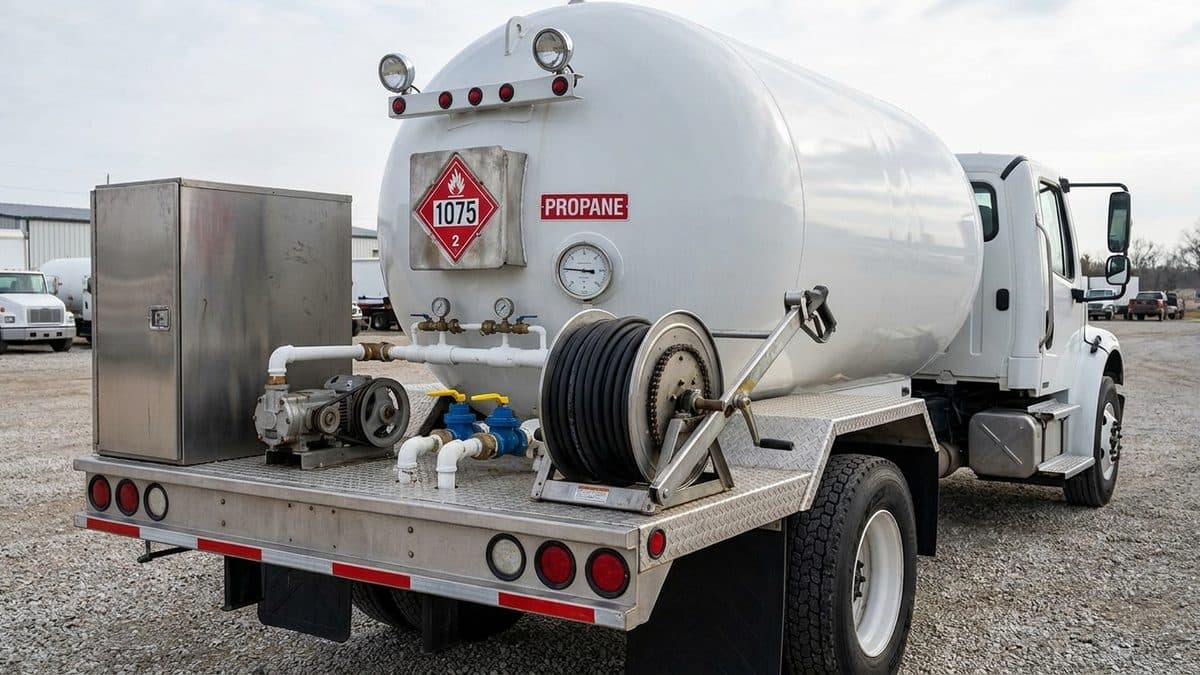
Propane trucks also carry equipment the basic vehicle report does not cover well: hoses, reels, meters, valves, and emergency shutoffs. Many propane companies check those every day under their own safety policies. If those checks live in a driver's head, you cannot show them to anyone.
A simple daily routine
• Pre-trip: the driver reviews the last report. If it listed a defect, confirm it was fixed and signed off. • During the day: note anything odd right away, not from memory at 6 p.m. • Post-trip: if there is a defect, write it up. If there is none, decide as a company whether you record clean days anyway. Many fleets do, because it shows the check happened. • Shop: fix, certify, and file. Keep at least three months.
Where TankSpotter fits
TankSpotter is a field app for propane and fuel-delivery operators. Drivers and service techs use their phones to document truck, tank, and plant inspections with photos, time stamps, and signatures, so the record exists when someone asks for it. Insurance professionals at Aegis Insurance, Nationwide Insurance, and eMaxx Assurance Group recommend it. See how TankSpotter safety records work.
Common questions
Does a propane driver still need a DVIR every day? Not under the federal rule when the truck is clean. Since the 2014 rule, a property-carrying driver only has to file a written report when a defect is found or reported. Your state or insurer may still ask for more.
How long do I keep a DVIR that lists a defect? Three months from the date of the report, along with the certification that the defect was repaired or that a repair was not needed (49 CFR 396.11).
Sources
• 49 CFR 396.11 Driver vehicle inspection report(s), eCFR — https://www.ecfr.gov/current/title-49/subtitle-B/chapter-III/subchapter-B/part-396/section-396.11 • 49 CFR 396.13 Driver inspection, eCFR — https://www.ecfr.gov/current/title-49/subtitle-B/chapter-III/subchapter-B/part-396/section-396.13 • FMCSA final rule, Inspection, Repair, and Maintenance; Driver-Vehicle Inspection Report (DVIR), 79 FR 75437, December 18, 2014 — https://www.federalregister.gov/documents/2014/12/18/2014-29331/inspection-repair-and-maintenance-driver-vehicle-inspection-report-dvir
This page is general information for propane operators. It is not legal advice and it does not certify compliance. Confirm the rule text your state has adopted.